Soil management in Washington’s dryland wheat: survey responses
Author: Dani Gelardi, Senior Soil Scientist and WaSHI Lead, Washington State Department of Agriculture
A new WSDA white paper sheds light on the “how and why” of soil management in Washington’s dryland wheat.
Soil management can lead to economic and soil health benefits
Wheat producers manage over 25% of Washington’s agricultural land and contribute up to $1 billion to its economy every year. Washington wheat is primarily grown in low rainfall zones without supplemental irrigation. As such, it is vulnerable to the impacts of climate change including increased drought, heat, and extreme weather events. Studies show that soil management may play a role in increasing farm resilience and the ability for growers to adapt to climate change.
While conservation practices like cover cropping or reduced-till may deliver benefits in some cases, however, results are not universal. Furthermore, multiple complex barriers may prevent conservation practice adoption, even when benefits are likely.
In Spring 2022 WSDA surveyed dryland wheat producers about their current and historic wheat production strategies, soil management challenges, the costs and benefits of conservation practices, and the impacts of the 2021 drought.
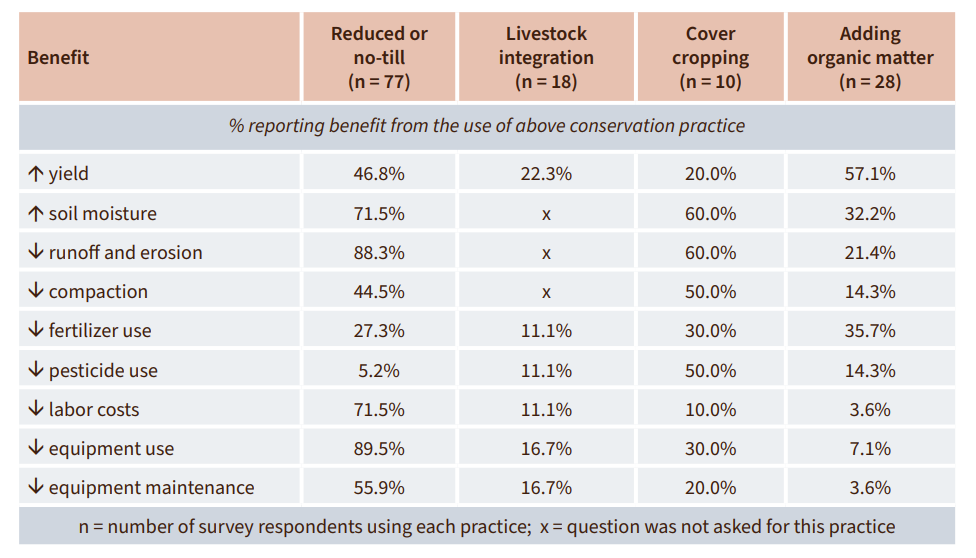
WSDA received 97 responses from producers in 12 counties, collectively managing over 450,000 acres across diverse rainfall zones and farm sizes. Of these acres, 72% are cultivated using reduced- or no-till, 13% receive organic matter amendments, 5% are grazed by livestock, and 3% are cover cropped. While impacts of the 2021 drought were near universal (97% reduced yield and 94% reduced soil moisture), respondents overwhelmingly reported benefits from the use of conservation practices, including increased yields and increased soil moisture.
The below table summarizes the benefits in soil health and long-term cost savings from each conservation practice included in the study.
But benefits are not universal and barriers to adoption are complex
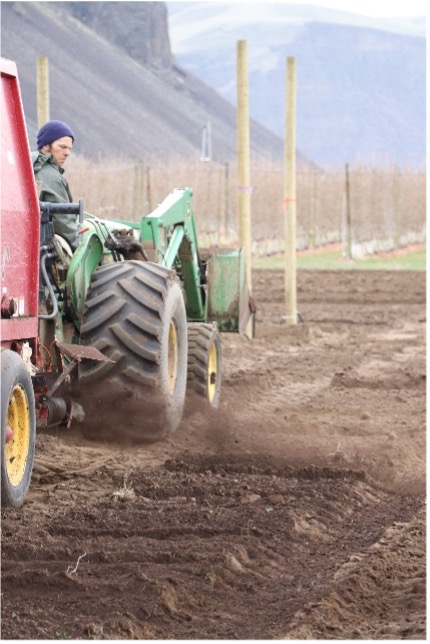
Though benefits were experienced by the majority using conservation practices, adoption of most practices remains low. Respondents reported various barriers and challenges. For example, 82% of producers who practice reduced-till cited equipment costs as a challenge, while 50% who use conventional-till cited equipment costs as a barrier to tillage reduction. Reduced-till producers commonly reported purchasing the following: higher horsepower tractors (62%), additional drills (65%), mowers (51%), and self-propelled sprayers (49%). This equipment can cost producers well over $1 million.
By contrast, the majority of cover crop producers received incentive payments (60%), and did not report purchasing new equipment (70%). Instead, cover crop usage may be hindered by a lack of information about how to do so (20%), especially in areas in low rainfall zones (74%), or within the terms of crop insurance requirements (14%).
Survey responses highlighted the complexity of soil management decisions, with unique considerations for every farm. Other lessons included:
Reduced or no-till adoption is high in Washington wheat, while the use of other practices such as cover cropping, livestock integration, and adding organic matter remains low.
Producers using conservation practices overwhelmingly reported benefits, including increased yields, long-term cost savings, and increased farm resilience in the form of improved soil moisture retention and erosion resistance.
The largest barrier to reducing tillage appears to be short-term equipment costs. By contrast, cover crop usage may be hindered by a lack of technical support. This information helps WSDA target future programs and policies towards addressing these nuanced and variable needs.
Drought impacts were reported irrespective of soil management strategies. While conservation practices may play a role in increasing operational resilience, they should be used in combination with other climate adaptation strategies (e.g., crop rotation and diversification or new drought-tolerant wheat varieties) where possible.
To read more about WSDA’s survey of soil management in Washington’s dryland wheat, read the full report here.
STAR comes to Washington
Author: Dani Gelardi, Senior Soil Scientist and WaSHI Lead, Washington State Department of Agriculture
Bringing an existing program to Washington
The Washington legislature has funded a new program at WSDA intended to generate economic valuation for on-farm soil health management. Saving Tomorrow’s Agriculture Resources (STAR) was created by Illinois farmers in 2017. It is now used in four states, with an additional seven receiving STAR funding through the USDA Climate Smart Commodities Program.
This free and voluntary program allows participants to answer simple, production-specific questions about their rotation, tillage, nutrient applications, and conservation practices. Answers are converted to a score of 1 to 5 STARs. STAR scoring relies on the expertise of local science committees made up of university researchers, conservation professionals, and farmers. STAR is intended to provide farmers:
A clear pathway to conservation adoption and free, unbiased technical support;
Public recognition for environmental stewardship;
Access to branding materials that can generate a market signal with consumers and supply chain partners; and
A consistent scale for evaluating progress across regions and systems
Creating market-based valuation for farmers
WSDA asked the legislature for STAR funding in direct response to lessons learned in the Washington Soil Health Roadmap. Washington producers overwhelmingly reported interest in using conservation practices and improving soil health. However, many growers cited economic barriers to experimenting with new techniques. Incentive programs like Sustainable Farms and Fields and NRCS EQIP are essential to assist growers with startup and transition costs. However, growers also asked WaSHI to develop market-based valuation, to sustain soil health practices after a grant cycle is complete.
STAR enrollment in Washington begins in summer 2024, for producers from approximately 10 cropping systems. WSDA is currently hiring an Economic Development Coordinator to launch the program, recruit crop-specific science committees, and develop individual field forms. For an example of region- and crop-specific field forms, visit the Colorado Department of Agriculture’s STAR webpage. In the meantime, stay tuned for more information about this exciting new opportunity for Washington producers.
Science-informed soil carbon policies in Washington and beyond
Author: Dani Gelardi, Senior Soil Scientist and WaSHI Lead, Washington State Department of Agriculture
The public interest in soil carbon
Soil carbon was historically the subject of niche curiosity, with only soil scientists and growers aware of its existence. The urgency of climate change, however, has sparked intensive public interest in managing farmland to build soil carbon. The “regenerative farming,” “climate-smart agriculture,” and “natural climate solutions” movements have led to enormous opportunities for soil scientists and growers alike, as new soil carbon initiatives are created by public, private, and philanthropic entities.
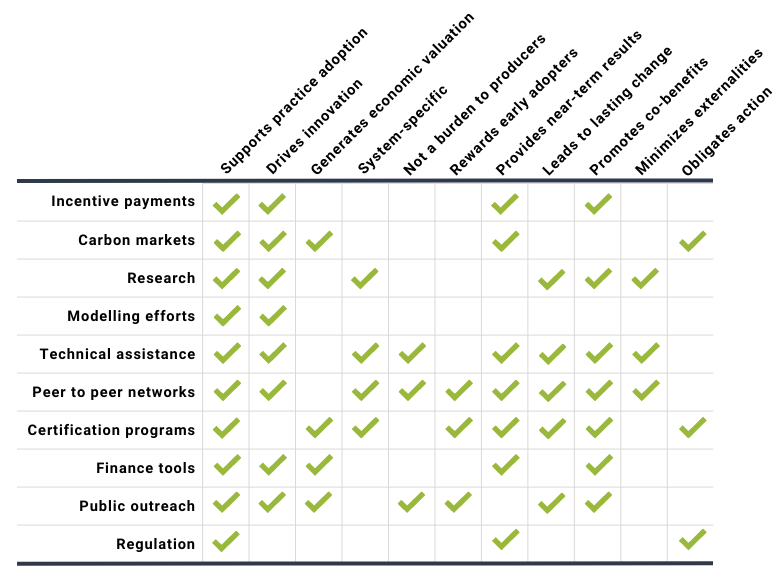
Current United States strategies to building and preserving soil carbon, and their potential contributions to an effective, science-informed policy and program portfolio. This table illustrates how diverse approaches are required to achieve diverse goals. From Gelardi et al. 2023, doi: 10.3389/fsufs.2023.1188133.
They have also led to confusion over what is possible or practical to achieve through agricultural lands, as soil carbon formation and storage is complex, and its response to management is context-dependent.
This poses challenges to decision makers in creating defensible, science-informed policies and programs that protect and build soil carbon.
To address these challenges, WaSHI collaborators have published a review in Frontiers in Sustainable Food Systems. The article summarizes current soil carbon science, in order to frame a “pros and cons” discussion of ten approaches in United States policy and practice.
Invest in soil for climate adaptation
Some approaches will be familiar to those in Washington, such as soil health initiatives (WaSHI), research (LTAREs and State of the Soils), and direct incentive payments (Sustainable Farms and Fields). Emerging approaches like carbon markets and crop insurance reform are also described. Ultimately, the article advocates for a multi-pronged policy approach that leverages the strengths and expertise of many diverse stakeholders.
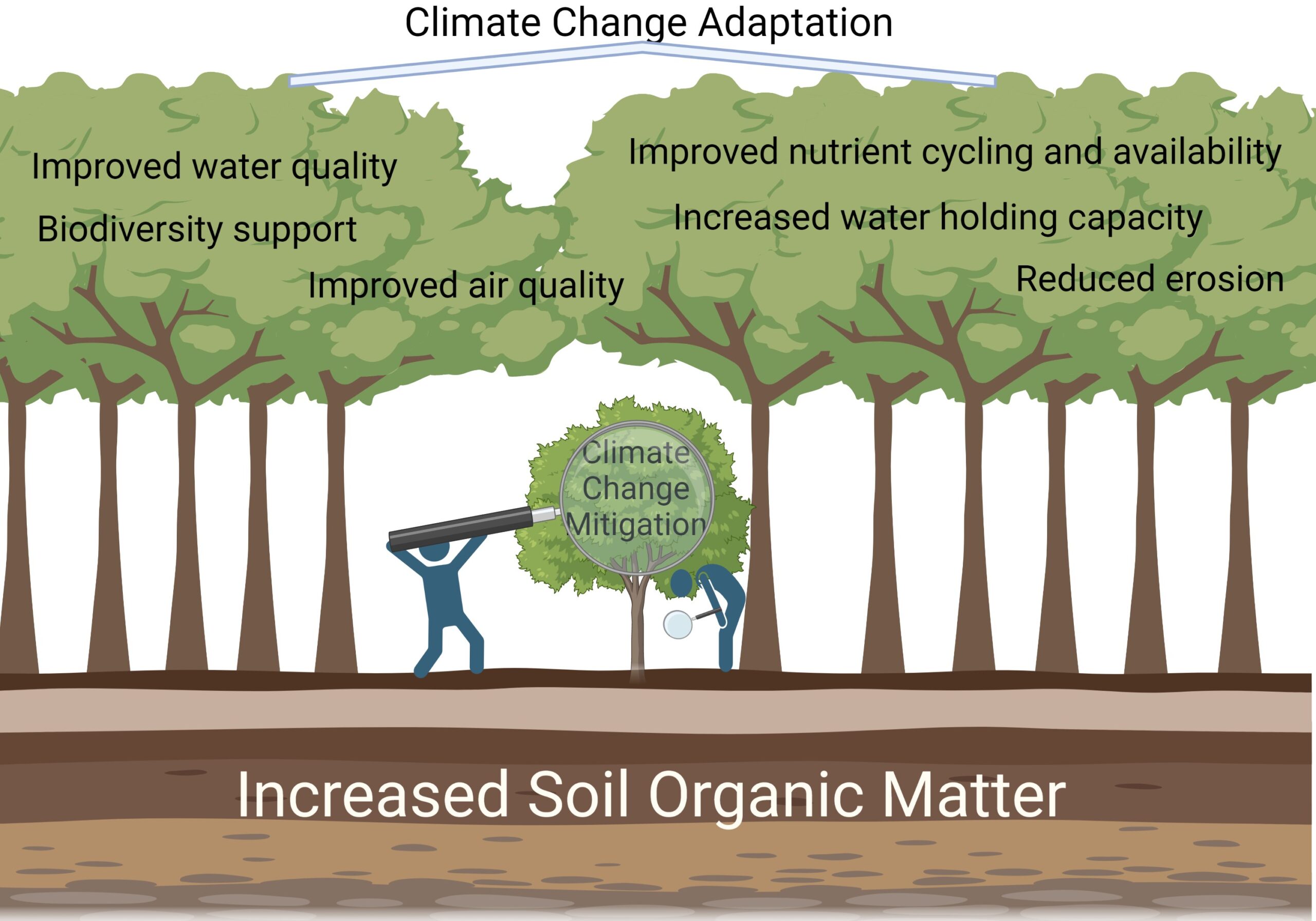
The overall aim of the article is to provide actionable direction for increasing soil carbon storage, while simultaneously encouraging decision makers to reach beyond carbon. Though agricultural management may increase soil carbon in some contexts, results are not universal. Independent of climate change mitigation, soils provide innumerable valuable services, which may be more important for climate change adaptation.
Missing the forest for the trees. This diagram illustrates how policies with a sole focus on increasing soil carbon for climate change mitigation may miss opportunities to promote other ecosystem services. Improving agricultural management can improve the capacity for growers and society to adapt to climate change, even in cases where it does not mitigate climate change. From Gelardi et al. 2023, doi: 10.3389/fsufs.2023.1188133.
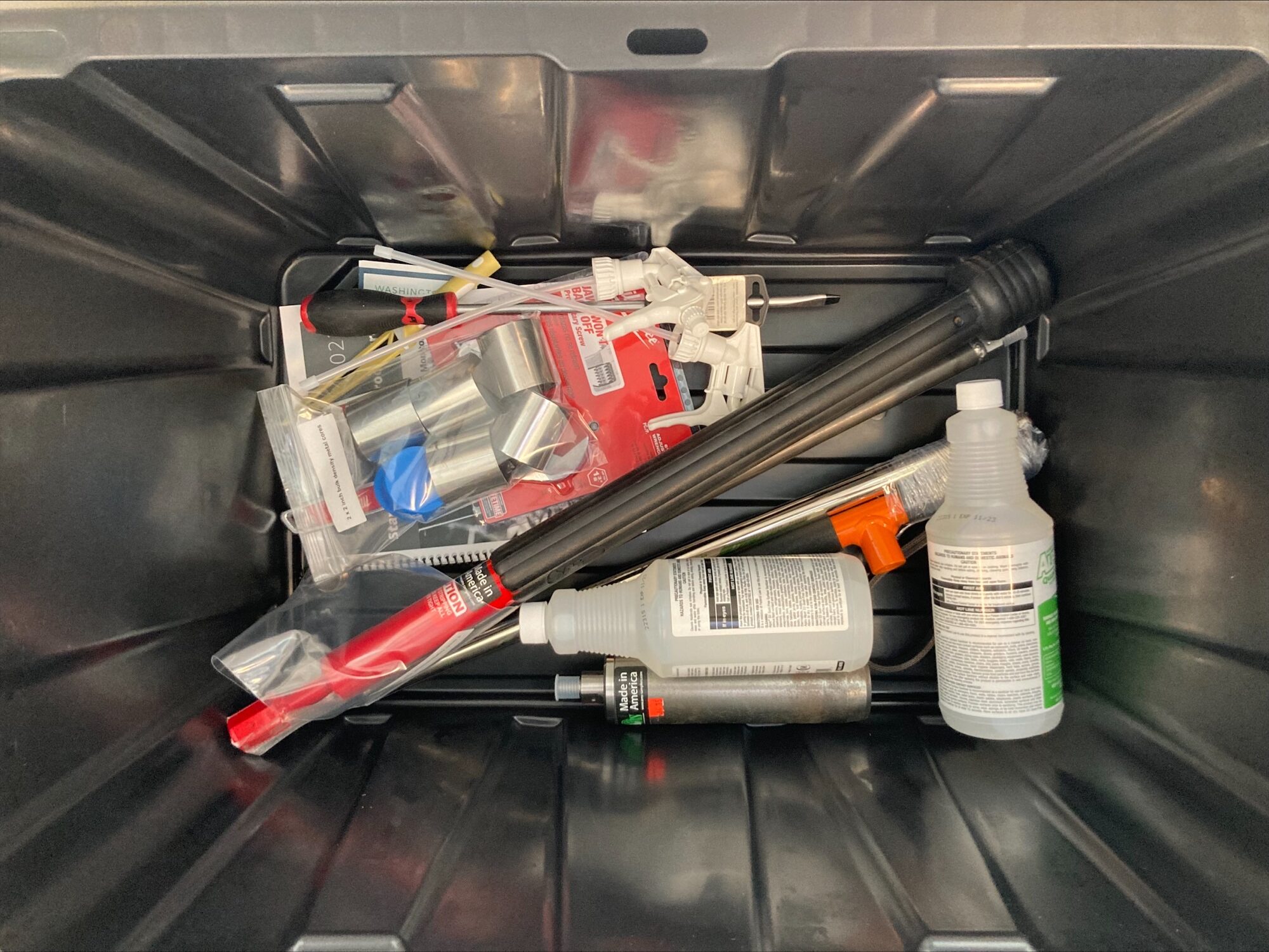
Twenty-five lucky conservation districts across Washington received a special soil health bucket from the Washington State Conservation Commission.
Acting like a soil health fairy, the commission purchased and organized partial soil health testing kits to share with conservation district staff doing boots-on-the-ground soil sampling. The Washington State Department of Agriculture, which coordinated the State of the Soils Assessment, helped to ensure the delivered kits were equipped with the necessary tools and materials.
While these weren’t delivered in the middle of the night, the tooth fairy’s usual MO, they still brought useful tools to staff who can now better collect soil samples and provide technical support for Washington producers.
Washington Tree Fruit Long-Term Agricultural Research and Education Site Launched
Author: Tianna DuPont, WSU Tree Fruit Extension Specialist.
The team involved in this project includes Willy Stockman, Lee Kalcsits, Chad Kreuger, Cameron Burt, Tracey Somera, Devin Rippner, and Jessica Waite.
A long-term investment
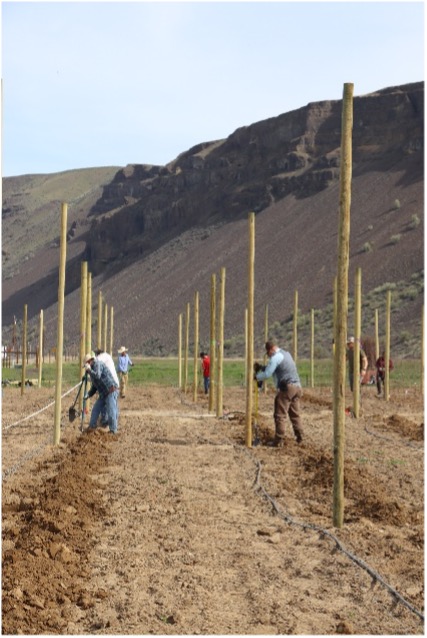
Prior to planting, compost was applied to some treatments.
Washington State University, in partnership with the Washington Soil Health Initiative, has launched a Long-Term Agroecological Research and Extension (LTARE) site focused on soil health in tree fruit. After months of building the team and creating a plan, trees were planted on April 25 in Rock Island, Washington, at the WSU Sunrise Research Farm, marking the beginning of what is planned to be a long, fruitful future of soil health research.
Maintaining and improving soil health is crucial to ensure the long-term productivity of agriculture and to protect the environment. It also contributes to the ongoing health of the rural economy and regional food security. To maintain our standing status as the top producer of apples, pears, and cherries, Washington growers are interested in addressing soil health challenges related to tree health, productivity, and fruit quality.
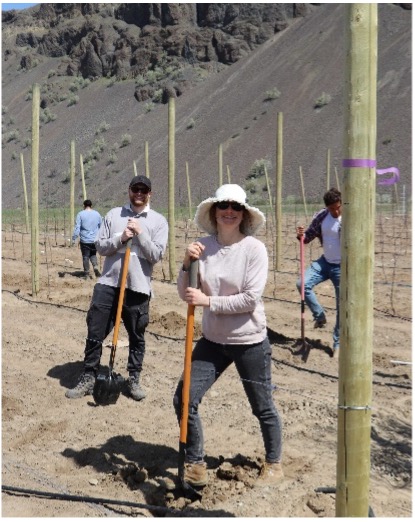
Tree planting in the first tree fruit LTARE trial on April 25th, 2023.
The Washington Soil Health for Tree Fruit LTARE aims to develop and evaluate management systems that optimize fruit yield and quality through sustainable soil health management practices.
The project will work to:
Establish best practices and standard operating procedures for optimal soil health
Reduce variability in orchards with organic matter amendments or other soil health-building practices
Reduce bitter pit and other disorders related to nutrient uptake and water/plant stress
Establish soil health practices that conserve water and buffer environmental stress in the face of climate change
Identify long-term sustainable approaches to managing soilborne disease and nematodes.
Three trials will be planted over the next three years, covering 2.5 acres each. The first trial, planted this year, will investigate practices to reduce variability, conserve water, and buffer environmental stress with organic matter applications. Treatments include a mulch treatment focused on water management, a high carbon treatment focused on building organic matter with compost and manure, and an integrated organic treatment compared to standard management.
The second trial that will be planted next year will focus on soil amendment-based strategies designed to mitigate apple replant disease.
Co-leader of the fruit LTARE enjoying seeing the trees finally being planted.
The third trial will focus on cherries and will include a similar set of treatments as in the first trial with apples. More information on the specific treatments can be found on the Wenatchee LTARE one-pager. Read the one-pager.
A unique opportunity
Regular research projects last one to five years and rarely can capture long-term changes in soil characteristics and those long-term effects on tree performance.
A place for collaboration
The planting is designed to host a collaboration of different researchers to look at many aspects of how soil health impacts production. We set things up to have a consistent long-term look but also to be flexible and able to host multiple questions that arise.
Building soil health takes long-term investment but can leverage deep rewards. We are excited to have the opportunity to work with an amazing team of researchers and growers to focus on questions that are important to our stakeholders and our communities.
A Slice of the Soil Organic Matter Pie
Author: Rachel Breslauer & Katherine Smith, PhD Students at Washington State University
Just like your favorite holiday pie, soil organic matter has a number of different slices that make it come together just right. Maybe each slice isn’t the same size, but without each piece, the pie just wouldn’t be complete. We can use this pie example to understand the different ways we can look at soil organic matter, either as a whole pie or as individual slices. You’ll either be hungry or sick of pie by the end of this.
We can think of soil organic matter like tasty holiday pie
The most common method used to understand organic matter in soil is to measure the size of the whole pie. This measure is called total soil organic matter and is commonly found on a regular soil test. While it is useful to know how big our pie is, it can take a long time, even years, for us to detect any changes in size.
Or you can measure slice by slice, by measuring the different components that make up soil organic matter as a whole. We may see changes long before we can see the whole pie changing. It can be helpful to look at the slices, instead of the whole pie, for two reasons.
First, we can detect changes in the size of the whole soil organic matter pie much faster. This can help us understand if the soil is responding positively or negatively to soil management changes you might be making on-farm.
Second, we can sometimes see individual slices changing together and understand how the composition of the pie itself might be changing.
Which Tests Make the Cut?
So, in terms of soil organic matter, “What makes a good soil health indicator?” As Dr. Steve Culman explains in a recent WaSHI blog post, a quality soil health indicator must be many things, including being sensitive to management and representative of soil function. That is where those individual pie slices come in. Some of the slices can show change much more rapidly than the whole pie or even other slices. However, that’s not all it takes to make the cut.
A good soil health indicator is also going to be affordable and suitable for commercial labs. This is important for continued access to pie… Ah, I mean soil health testing services.
When compiling the WSU Extension fact sheet, “A practical guide to soil health indicators for monitoring shifts in soil organic matter,” we used the criteria Dr. Culman outlined for assessing various indicators. We looked around to see how many indicators were available that measured slices of the soil organic matter pie. Then, we researched those indicators and assessed them based on cost and accessibility in the Pacific Northwest.
Chances are, you already have a good idea of how big your soil organic matter pie is in your different fields. You probably get that data from your regular soil tests. However, if you want to see how your pie is changing, you’ll probably want to zoom into some individual slices.
Realistically, a few factors will play into the slice(s) you choose to measure.
First, it makes sense to identify a test that measures something that is important to you and your goals on your farm. Are you most interested in soil organic matter to supply nutrients? Or improve soil structure? Or increase biological activity?
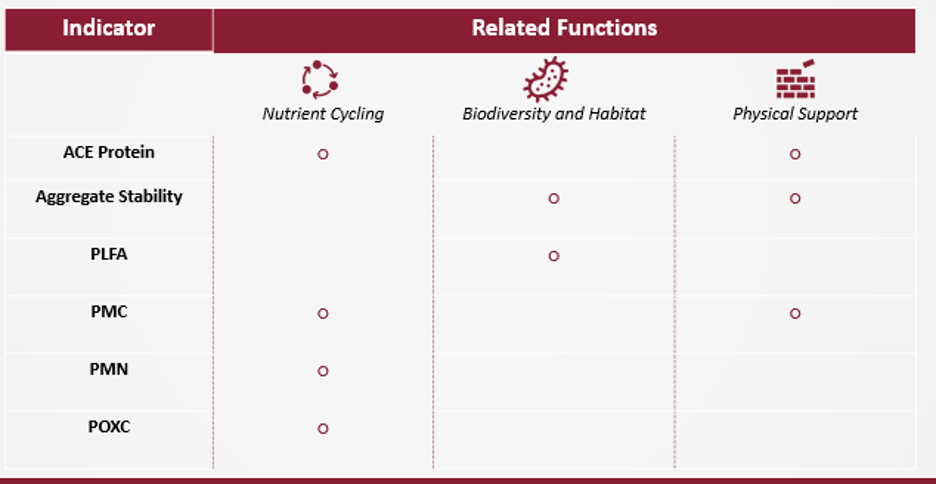
Based on your interests, some slices may be more interesting than others. In this fact sheet, we outline the relationship between each commercially-available indicator and soil functions. These functions are summarized in Figure 1.
Figure 1. Indicators that measure soil organic matter are linked to different soil functions.
Now, this is the point where we admit that the pie analogy is not perfect. Each indicator we outline in the fact sheet is related to different slices of the soil organic matter pie. These indicators do not, however, represent independent fractions of the pie. The parts of the pie they measure can overlap a lot!
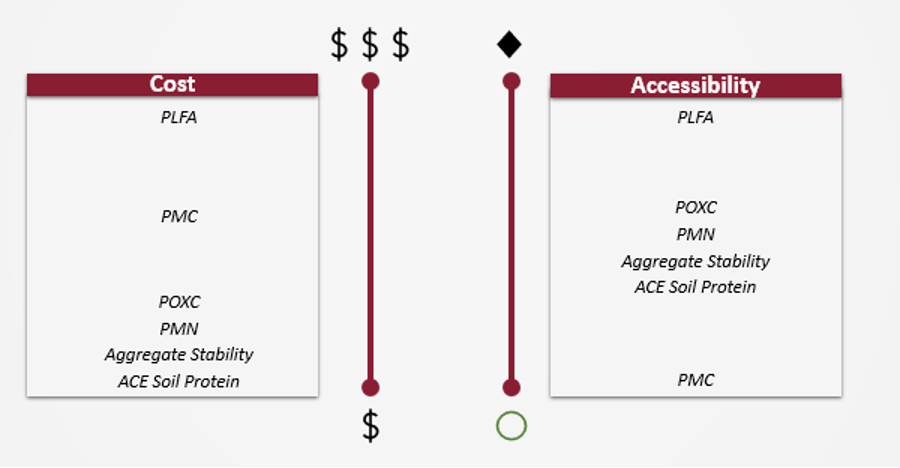
Second, the reality of soil health testing is that some tests are much cheaper and more readily available than others. How useful is a test that you can’t find or afford to use regularly? In this fact sheet, we give a rough idea of how expensive and accessible each of the commercially available tests is. The cost and accessibility of each test is summarized in Figure 2.
Figure 2. Indicators used to measure soil organic matter differ in availability and cost.
No pie there, we promise. And while you’re at it, you can learn more about all of the soil organic matter slices we’ve been talking about in another WSU Extension publication, “Understanding and Measuring Organic Matter in Soil.”
Growing interest in soil health: an appreciation-based STEM curriculum for kids
Authors: Tarah Sullivan, Associate Professor and Molly McIlquham, Extension coordinator, Washington State University
Soil health education for youth is vital to change the outlook and attitude of future generations toward soil stewardship. Soil health is linked to some of the most important issues facing our planet and future generations, from a warming climate and increasing extreme weather events to toxic buildup of waste and contaminants, to fresh air and water, to the very food quantity and quality on our tables each and every day. Yet, unfortunately, most students enter college with little to no understanding of the importance of soil in our everyday lives.
That’s why WSU Associate Professor and soil microbiologist Dr. Tarah Sullivan has made it her mission to share her passion for soil with elementary school-aged children. With the help of regional partners at schools, science centers, 4-H Extension developers, and environmental outreach NGOs, Tarah was able to test many different strategies and finally develop a series of simple, soils-based STEM curriculum modules targeting elementary school-age children.
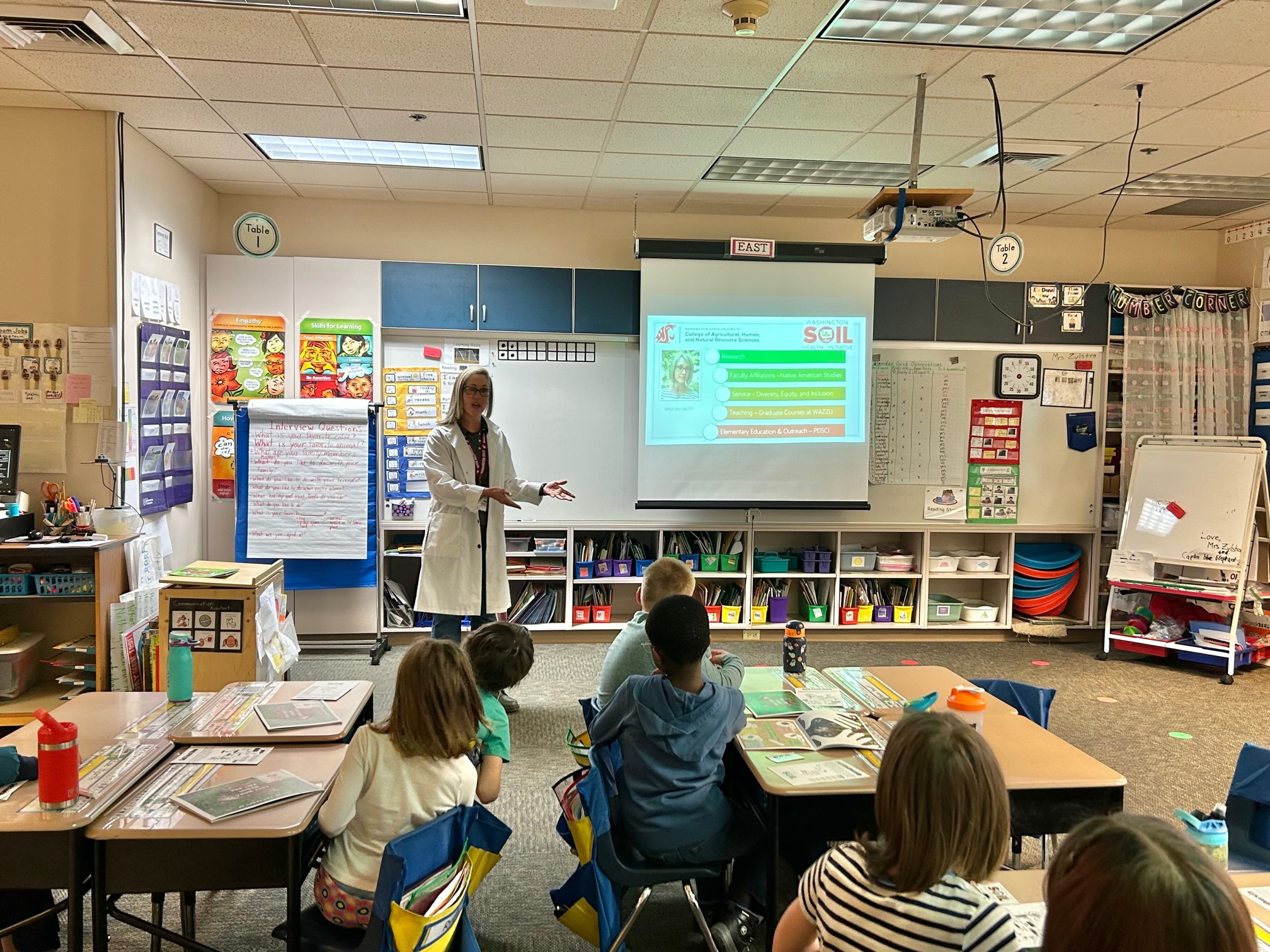
Tarah Sullivan talking with students about soil science career opportunities
Development of Hands-On Curriculum
Tarah and her team first worked to develop hands-on, easy-to-understand soil health awareness curriculum for school-age children through a partnership with the Palouse Discovery Science Center. Through trial and error, they created the “Earth Explorers” summer camp, where over 30 students learned about geology, soil science, and soil biology. Tarah and partners then established an after-school program for exploring soils, expertly named “Mudskippers,” where youth explored soils and biodiversity. In the summer of 2022, the youth got their hands dirty installing a vermicomposting system and raised garden beds at the “How to Grow Your Own Food” summer camp. At camp, they learned best practices to maintain soil and plant health simultaneously through lessons on soil biology as they grew the plants.
These events cultivated enthusiasm amongst the students and adults, so much so that, through a partnership with the Community Action Center, a large greenhouse will be donated to the center to expand the “Grow Your Own Food” programming and share food with our Pullman community.
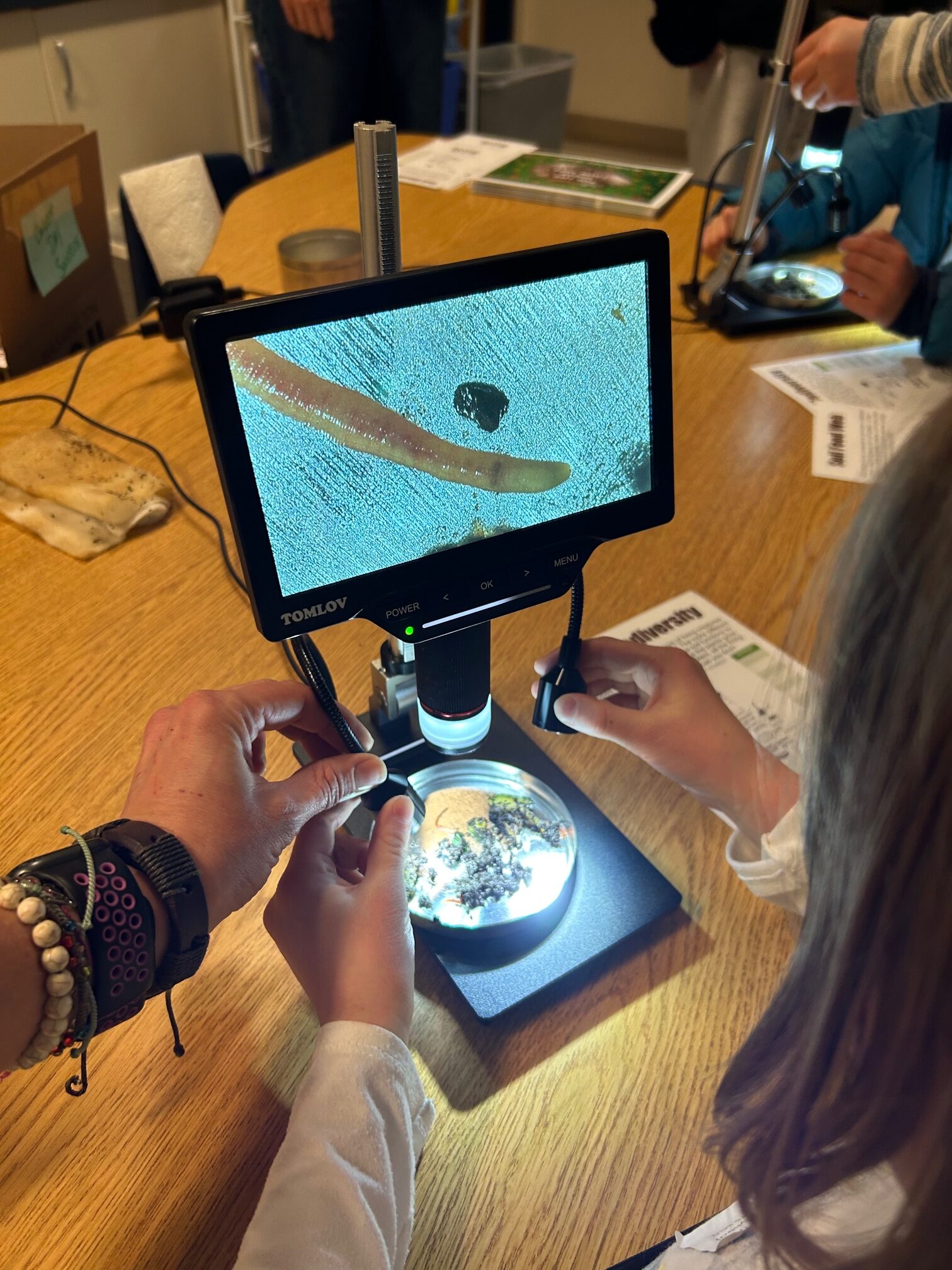
Third-grade students viewing worms under a microscope.
More Advanced Curriculum
The curriculum for each age group is vastly different. While the topics may be similar, the depth to which each is explored varies. At the Pullman, WA, high school, Tarah partnered with Ms. Olivia Craine-Karas to develop a curriculum on the importance of vermicomposting systems and compost food web. Students designed their own worm composting systems and, as future scientists, took measurements throughout the year, then gave a final report on the success or failure of their system at the end of the year. Through the 2012-2022 school year process, an expert, Tarah, came into the classroom to teach and answer questions about soils, compost, and biodiversity roles in soil health.
In the spring of 2022, Linda McLean of the 4-H Extension at the Coleville confederated tribes teamed up with Tarah to present a hands-on soil biology demonstration booth at the Sunflower Festival for the Salish language school, Paschal Sherman Indian School. This festival brought in hundreds of students and parents, who all had the opportunity to observe compost in each stage of decomposition. At the booth, Tarah then shared information on soil health and allowed everyone to use digital microscopes to view the worms and other important compost food web biology.
Soil Health Education Modules
All these experiences culminated in Tarah’s partnership with the Lake Roosevelt Forum and PacWest to create the Soil Health Education Modules. You can access the soil educational modules for K-5th graders they created here.
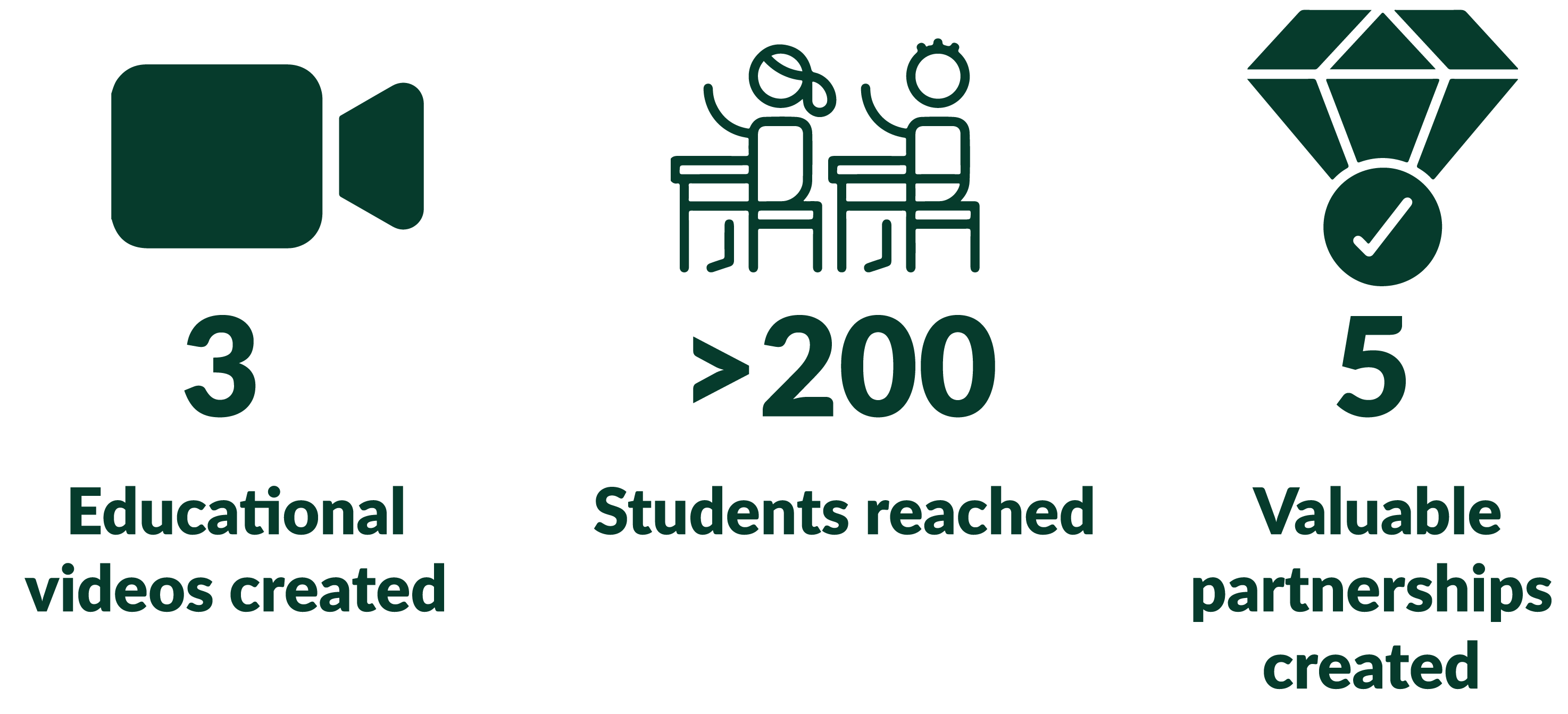
Ultimately, these projects have reached hundreds of elementary school-aged children in Washington with books and educational activities, increasing awareness of soils and soil biodiversity. These tools will inspire the next generation of soil stewards and foster a greater appreciation for soil’s vital role in our world. Soil health education for youth is a vital step in addressing global issues related to soil. Through partnerships and collaborations, Tarah and her team have developed hands-on and easy-to-use curriculum for students. This will increase awareness and interest in soil health, leading to a more sustainable future.
Resources:
This work is supported in part by the Washington State University Center for Sustaining Agriculture & Natural Resources BIOAg Program under grant number 193
Building system resilience through diversification: livestock integration
Author, Katherine Smith, Soil Science Ph.D. student, Washington State University
Have you ever met a farmer who wanted to be a cowboy?
I haven’t. *laughs nervously*
If you have been a part of any conversations about alternative management systems lately, you may have heard this joke used to ease any tension in the room. The topic of reintegrating livestock can sometimes be met with resistance. This fairly reflects the many challenges that come with these practices. So, approaching this subject is not always easy.
The room still sighs when the topic of conversation shifts to livestock. But those sighs have an increasingly agreeable undertone. As we gain more understanding of the environmental drawbacks of our current systems, interest in alternative practices is growing. That interest does not seem to be deterred by producers sharing about obstacles or unexpected outcomes. Most have accepted that management of our agricultural systems needs to become more adaptive and resilient if we want to stay productive and profitable. Reintegrating livestock into our cropping systems is (just) one tool that can be used towards this goal. So, let’s talk about it.
Mixed crop-livestock systems
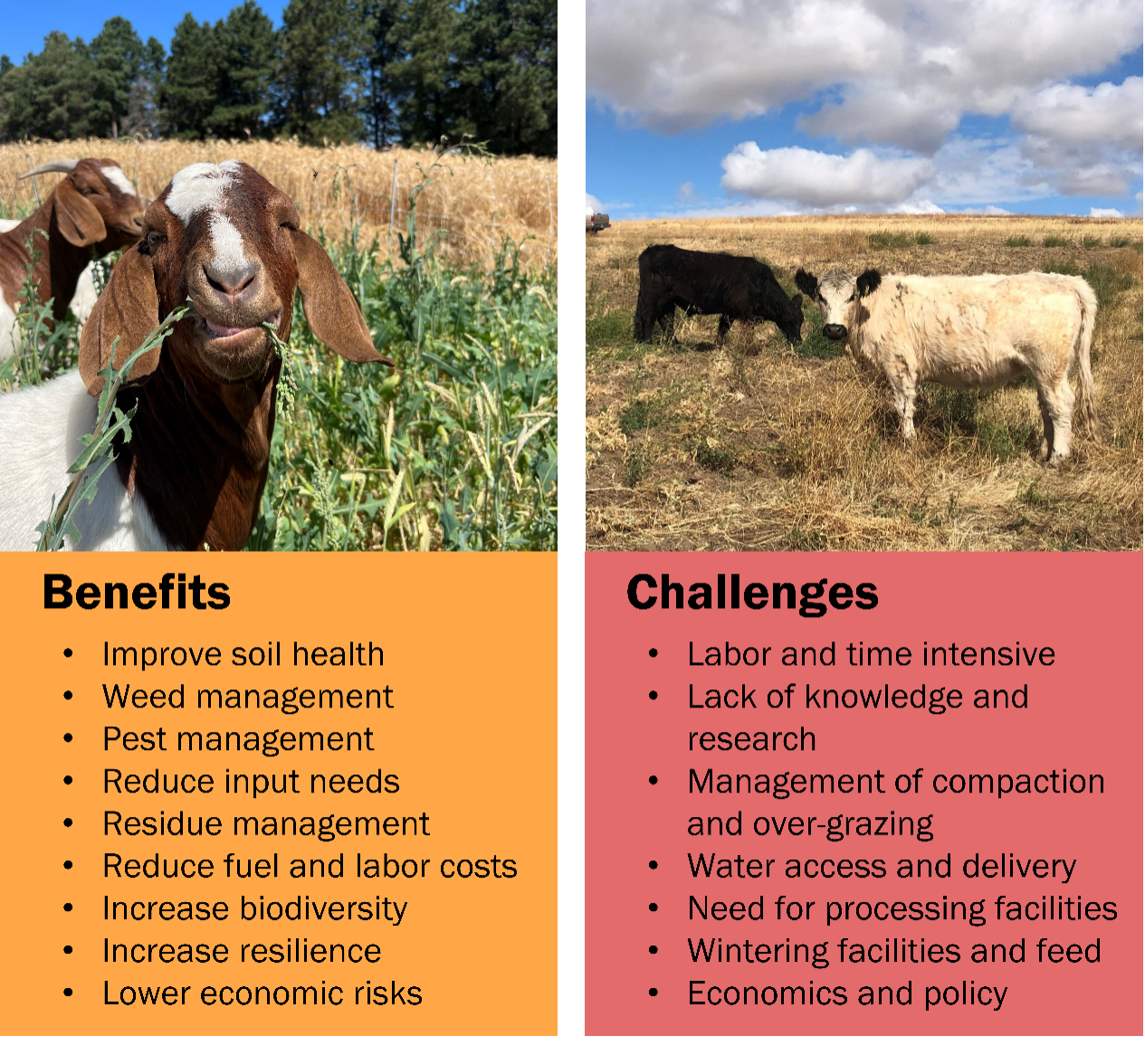
Potential benefits and challenges in mixed crop-livestock systems.
Historically, it was commonplace for crops and livestock to share a home. Animals grazed uncropped or marginal lands, controlling weeds and turning the soil. They provided manure to the land and food and fiber to us. Livestock served as an additional source of income, reducing risk and providing flexibility on when and what to sell. They also offered an alternative way to utilize a failed crop or to manage residue.
That idyllic image of livestock roaming the land comes from a time when the average farm, and the world, was smaller. The introduction of large farming equipment shifted agriculture towards more specialized and time/labor efficient practices. However, as agriculture moves toward reducing environmental impacts while trying to maintain productivity, finding ways to exploit those age-old livestock benefits is proving useful.
Though the big picture looks different, considerable research has shown that there is still much to be gained for both the farm and the environment in these integrated systems 1,2,3,4. Potential benefits and co-benefits include enhanced soil organic carbon (SOC) 5,6, improved nutrient cycling and resource-use efficiency 7,8, reduced disease and weed pressure 1,9, and more stable and abundant soil microbial communities 7,10,11. These benefits allow for things like less reliance on external inputs and, when combined with diverse rotations and practices, can lead to increased system resilience 12. Diversifying income streams and increasing flexibility in making management decisions enhances this resilience further.
If we can exploit these benefits, our agricultural systems may be better prepared to take on the uncertainties that lie ahead. But, as always, what I have described is the ideal scenario. The benefits are real, but the application is a bit more complicated.
Is it ever “one-size-fits-all”?
Just like most practices, mixed crop-livestock systems are not one-size-fits-all.
Benefits, trade-offs, and obstacles to adoption vary significantly across differences in climate and soil type 12,13. For example, in dryland agriculture water is going to be more significant concern than in less arid locations. Erosion may be higher on the list when grazing steeper land. There are also a range of management strategies and levels of integration over which success and benefits will vary 14. Depending on desired outcomes, one might choose to graze livestock on cover crops, crop residue, or weeds. Alternatively, integration can happen by applying manure that has been produced on farm or utilizing crops for on-farm animal feed. If not carefully managed, overstocking will quickly shift things from beneficial to detrimental. Moderate grazing intensities typically leading to the best outcomes 15,16,17. And this only starts to get at the management complexity and numerous decisions to be made.
What will it take to increase successful adoption of integrated systems?
From the bottom up, we need more regional information and more resources. From the top down, complete system redesign.
Unfortunately, economics and policy are major drivers of the status quo and have typically prioritized systems that tend to separate animals from cropland. Research has identified that a shift in government priorities through “…redesign of research programs, credit systems, payments for ecosystem services, insurance programs, and food safety regulations to focus on whole farm outcomes and the creation of a circular economy” are needed to support reintegration of livestock into our cropping systems 18. Producers need a flexible system that supports innovation and assumes some of the risk that comes along.
In the meantime, regional research is necessary to define what benefits we might be able to take advantage of in any given location. We can start to chip away at this by developing more field trials and case studies that attempt to answer some of the pressing questions related to management, risk, and return. Not only does research have the potential to influence policy, but it can also inform on-farm decision making for producers already taking the jump into these practices.
Building from the bottom up: mixed crop-livestock research on the Palouse
Back in 2012, Washington State University researchers established a research trial just north of Pullman, WA on the Zakarison Partnership land. In 2016, the project became a part of the USDA Long Term Agroecosystem Research (LTAR) network (This is different from the WaSHI network of long term sites). The project was designed to evaluate the sustainability of four management systems: conventional no-till, mixed crop-livestock conventional no-till, organic annual crop, and mixed crop-livestock organic perennial 19,20.
When I moved to eastern Washington back in 2020, I became the third graduate student owner of this long-term research trial. Though the project has evolved in some ways, we continue to assess the productivity, environmental, and economic realms of sustainability in mixed crop-livestock systems. The longer the trial runs, the more insight we gain into how these systems perform long-term. It has been both fun and challenging to be a part of research that takes a more adaptive approach. Though I don’t know much about the specific outcomes with this trial in my time here, I have learned that no single practice is the golden ticket. It is all about choosing the right tool for the situation. I have also learned that dealing with livestock can be complex… and often challenging. But rewarding. The verdict is still out on the rest.
Final thoughts
Integrating livestock is (just) one tool in the toolbox of increasing diversity and managing agricultural systems around the uncertainties we face. But it may be a very valuable one. People are doing it. Partnerships between producers and ranchers are forming. The next time livestock integration slips into the conversation, take note of the tone of the room. Keep an eye out for a herd of cattle or a flock of sheep when you’re out driving. There are more and more of them roaming the drylands these days, and hopefully more to come. If you see me chasing escape artist goats as you drive by, please pretend you didn’t.
And finally, we are still somewhat lacking in written resources about where to start with livestock in this region, but the knowledge base is growing. There is some additional reading on livestock-related topics to explore below. Ask around, too! Let’s build from the bottom up.
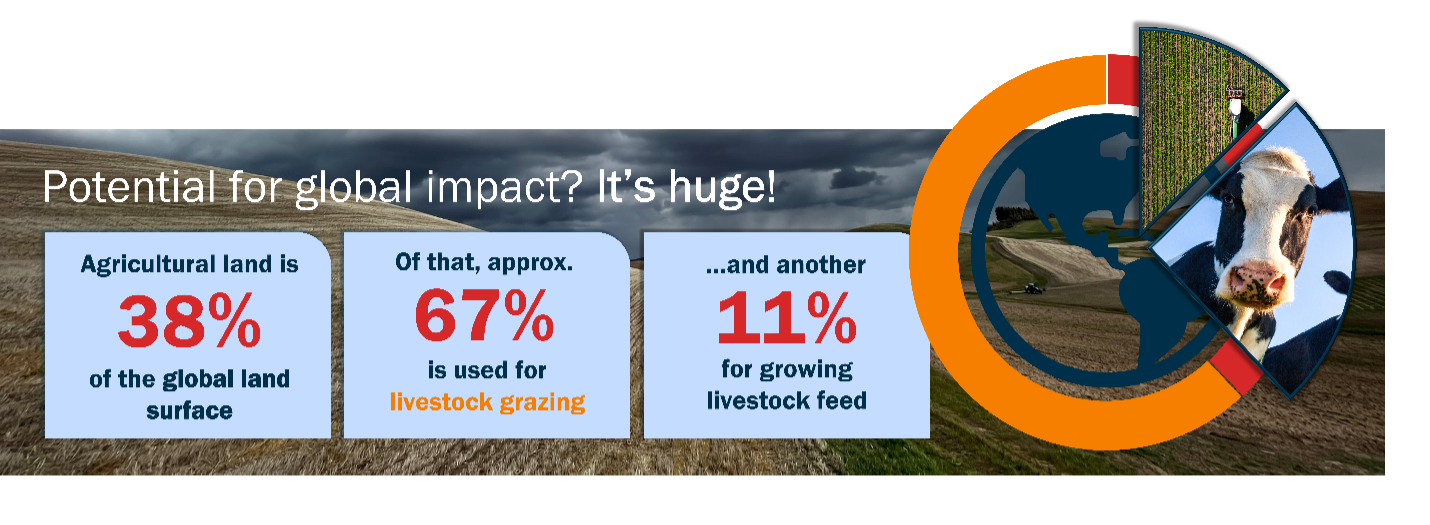
The potential of mixed crop-livestock systems for global impact is huge. Statistics from Food and Agriculture Organization of the United Nations FAOSTAT Database (2022).
Strip Tillage of Vegetables with Livestock Integration—Eric Williamson. Farmer to Farmer Case Study. Washington State University. https://www.youtube.com/watch?v=KU_9ikqtDVw
Magdoff, F., van Es, H.M., 2021. Building Soils for Better Crops: Ecological Management for Healthy Soils, 4th ed. Sustainable Agriculture Research and Education (SARE) Outreach, College Park, MD. https://www.sare.org/resources/building-soils-for-better-crops/
References:
Russelle, M.P., Entz, M.H., Franzluebbers, A.J., 2007. Reconsidering Integrated Crop–Livestock Systems in North America. Agronomy Journal 99, 325–334. https://doi.org/10.2134/agronj2006.0139
Hilimire, K., 2011. Integrated Crop/Livestock Agriculture in the United States: A Review. Journal of Sustainable Agriculture 35, 376–393. https://doi.org/10.1080/10440046.2011.562042
Lemaire, G., Franzluebbers, A., Carvalho, P.C. de F., Dedieu, B., 2014. Integrated crop–livestock systems: Strategies to achieve synergy between agricultural production and environmental quality. Agriculture, Ecosystems & Environment, Integrated Crop-Livestock System Impacts on Environmental Processes 190, 4–8. https://doi.org/10.1016/j.agee.2013.08.009
Sekaran, U., Lai, L., Ussiri, D.A.N., Kumar, S., Clay, S., 2021. Role of integrated crop-livestock systems in improving agriculture production and addressing food security – A review. Journal of Agriculture and Food Research 5, 100190. https://doi.org/10.1016/j.jafr.2021.100190
Brewer, K.M., Gaudin, A.C.M., 2020. Potential of crop-livestock integration to enhance carbon sequestration and agroecosystem functioning in semi-arid croplands. Soil Biology and Biochemistry 149, 107936. https://doi.org/10.1016/j.soilbio.2020.107936
Carvalho, J.L.N., Raucci, G.S., Cerri, C.E.P., Bernoux, M., Feigl, B.J., Wruck, F.J., Cerri, C.C., 2010. Impact of pasture, agriculture and crop-livestock systems on soil C stocks in Brazil. Soil and Tillage Research 110, 175–186. https://doi.org/10.1016/j.still.2010.07.011
Acosta-Martínez, V., Bell, C.W., Morris, B.E.L., Zak, J., Allen, V.G., 2010. Long-term soil microbial community and enzyme activity responses to an integrated cropping-livestock system in a semi-arid region. Agriculture, Ecosystems & Environment 137, 231–240. https://doi.org/10.1016/j.agee.2010.02.008
Szymczak, L.S., Carvalho, P.C. de F., Lurette, A., Moraes, A. de, Nunes, P.A. de A., Martins, A.P., Moulin, C.-H., 2020. System diversification and grazing management as resilience-enhancing agricultural practices: The case of crop-livestock integration. Agricultural Systems 184, 102904. https://doi.org/10.1016/j.agsy.2020.102904
Hatfield, P.G., Lenssen, A.W., Spezzano, T.M., Blodgett, S.L., Goosey, H.B., Kott, R.W., Marlow, C.B., 2007. Incorporating sheep into dryland grain production systems. Small Ruminant Research 67, 216–221. https://doi.org/10.1016/j.smallrumres.2005.10.004
Lacombe, S., Bradley, R.L., Hamel, C., Beaulieu, C., 2009. Do tree-based intercropping systems increase the diversity and stability of soil microbial communities? Agriculture, Ecosystems & Environment, Temperate agroforestry: When trees and crops get together 131, 25–31. https://doi.org/10.1016/j.agee.2008.08.010
Marchão, R.L., Lavelle, P., Celini, L., Balbino, L.C., Vilela, L., Becquer, T., 2009. Soil macrofauna under integrated crop-livestock systems in a Brazilian Cerrado Ferralsol. Pesq. agropec. bras. 44, 1011–1020. https://doi.org/10.1590/S0100-204X2009000800033
Garrett, R., Niles, M.T., Gil, J.D.B., Gaudin, A., Chaplin-Kramer, R., Assmann, A., Assmann, T.S., Brewer, K., de Faccio Carvalho, P.C., Cortner, O., Dynes, R., Garbach, K., Kebreab, E., Mueller, N., Peterson, C., Reis, J.C., Snow, V., Valentim, J., 2017. Social and ecological analysis of commercial integrated crop livestock systems: Current knowledge and remaining uncertainty. Agricultural Systems 155, 136–146. https://doi.org/10.1016/j.agsy.2017.05.003
Sulc, R.M., Franzluebbers, A.J., 2014. Exploring integrated crop–livestock systems in different ecoregions of the United States. European Journal of Agronomy 57, 21–30. https://doi.org/10.1016/j.eja.2013.10.007
Moraine, M., Duru, M., Therond, O., 2017. A social-ecological framework for analyzing and designing integrated crop–livestock systems from farm to territory levels. Renewable Agriculture and Food Systems 32, 43–56. https://doi.org/10.1017/S1742170515000526
De Faccio Carvalho, P., Anghinoni, I., de Moraes, A., Souza, E., Sulc, R., Lang, C., Flores, J.P., Lopes, M., Silva da Silva, J., Conte, O., De Lima Wesp, C., Levien, R., Fontaneli, R., Bayer, C., 2010. Managing grazing animals to achieve nutrient cycling and soil improvement in no-till integrated systems. Nutrient Cycling in Agroecosystems 88, 259–273. https://doi.org/10.1007/s10705-010-9360-x
Abdalla, M., Hastings, A., Chadwick, D.R., Jones, D.L., Evans, C.D., Jones, M.B., Rees, R.M., Smith, P., 2018. Critical review of the impacts of grazing intensity on soil organic carbon storage and other soil quality indicators in extensively managed grasslands. Agriculture, Ecosystems & Environment 253, 62–81. https://doi.org/10.1016/j.agee.2017.10.023
Ribeiro, R.H., Ibarr, M.A., Besen, M.R., Bayer, C., Piva, J.T., 2020. Managing grazing intensity to reduce the global warming potential in integrated crop–livestock systems under no-till agriculture. European Journal of Soil Science 71, 1120–1131. https://doi.org/10.1111/ejss.12904
Garrett, R., Ryschawy, J., Bell, L., Cortner, O., Ferreira, J., Garik, A.V., Gil, J., Klerkx, L., Moraine, M., Peterson, C., dos Reis, J.C., Valentim, J., 2020. Drivers of decoupling and recoupling of crop and livestock systems at farm and territorial scales. Ecology and Society 25. https://doi.org/10.5751/ES-11412-250124
Wachter, J.M., Painter, K.M., Carpenter-Boggs, L.A., Huggins, D.R., Reganold, J.P., 2019. Productivity, economic performance, and soil quality of conventional, mixed, and organic dryland farming systems in eastern Washington State. Agriculture, Ecosystems & Environment 286, 106665. https://doi.org/10.1016/j.agee.2019.106665
Davis, A.G., 2022. Sustainability of organic, no-till, and mixed crop-livestock systems on the Palouse (Dissertation). Washington State University, Pullman, WA.
WSDA creating resources for policymakers and farmers
Author: Dani Gelardi, Senior Soil Scientist and WaSHI lead, Washington State Department of Agriculture
The folks at the Washington State Department of Agriculture (WSDA) have been busy providing guidance on soil health to federal policymakers and farmers alike. Two main outputs have been created since the December newsletter:
WaSHI open letter to USDA
The United States Department of Agriculture (USDA) recently requested public input on how to allocate over $19 billion for conservation programs across the United States. WaSHI submitted the below recommendations:
Increased hiring of economists, social scientists, and data scientists
The creation of programs to attract and train multidisciplinary practitioners to soil science, agriculture, and land management
The distribution of state-specific funds to improve COMET or climate impact estimation tools
The creation of a program to fund experimental, “high risk high reward” soil health practice research and implementation
The creation of a unified, nationally-recognized soil health grower certification program
Crop insurance reform and the creation of climate-smart financial tools
Increased funding for technical assistance
The creation of toolkits and best management practices for statewide soil health initiatives
Increased coordination, communication, and collaboration
To learn more about WaSHI recommendations and guiding principles for promoting soil health, read the open letter here.
Soil sampling webinar
Interested in learning more about how to interpret soil tests? Follow the link below to watch a recorded presentation co-created by Dani Gelardi (WSDA) and Deirdre Griffin LaHue (WSU), presented through the Washington Conservation Commission’s Center for Technical Development (CTD).
What: Understanding Soil Tests (recorded 1 hour webinar from March 14th, 2023)
Why: Soil testing has changed over time—to become more comprehensive, but also more confusing
More info: Watch this free recorded webinar to learn all about interpreting soil tests. Discuss how soil testing has changed over time—to become more comprehensive, but also more confusing! Navigate the brave new world of “soil health” by going back to the basics. Why is it still so crucial to measure soil pH, soil texture, and soil organic matter? How can these building blocks help us understand new measurements of soil biological and physical properties? Hear the answers while learning best practices for getting and interpreting quality laboratory results.
SoilCon: Increasing the Awareness of Soil Health Across Washington
Author: Molly McIlquham, Extension Coordinator, Washington Soil Health Initiative
During a listening session held across Washington state, a seemingly simple question was posed: where can one find regionally specific information about soil health? However, the answer turned out to be much more complex than expected. Due to the diversity of cropping systems and agroecosystems across the state, general soil health improvement guidance falls short. So, to find commonalities and clarify differences in soil health in different regions and to fulfill a primary goal of the Washington Soil Health Initiative (WaSHI) of increasing awareness of soil health, SoilCon was born.
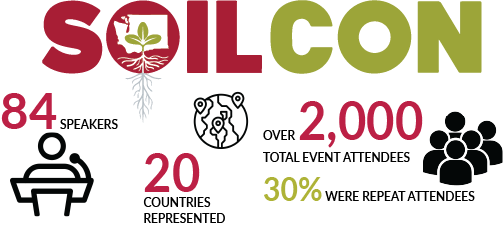
SoilCon has been an incredible resource for those interested in improving soil health across the globe. Over the past three years, the event has brought together 84 experts from across the country to share their expertise on a range of topics, including long-term research, soil biology, and Native American perspectives of soil health. Over three years, SoilCon has covered many subjects, providing something for everyone.
Thanks to generous sponsorship from Western SARE, SoilCon has been available to all attendees for free. The organizers from various Washington-based organizations invested countless hours in surveying the interests of agricultural professionals to ensure that the conference covered the most relevant topics. SoilCon has successfully featured various soil health-related topics, including policy updates, farmer perspectives, and research findings shared through concise lightning talks. SoilCon has been a valuable resource for agricultural professionals, providing them with up-to-date information on soil health topics for free.
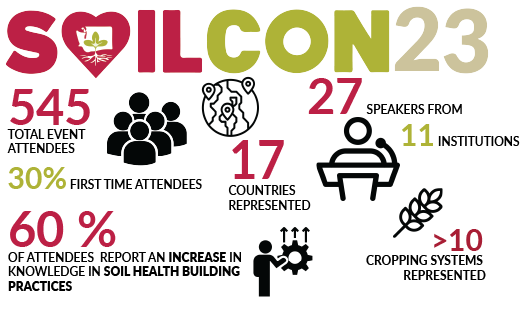
And SoilCon23 itself was no different, where the focus was taking soil health basic principles to practice with the most popular sessions, including the highly anticipated producer panel, the cover cropping academic roundtable, and University of Wisconsin’s Randy Jacksons talk titled “Climate-Smart Agriculture and Healthy Soil Comes From Agroecosystems That Regenerate Soil Carbon Over Time.”
If you missed any year of SoilCon, don’t worry. All sessions were recorded, and you can access them on WSU CSANR’s YouTube channel (you can subscribe, too). And if you’re overwhelmed by all the information in the videos, don’t worry! The SoilCon23 resource roundup is here to save the day summarizing key talking points and providing links to resources mentioned in each talk.
SoilCon has become a valuable resource for those seeking regionally specific information about soil health. The event’s broad range of topics and diverse speakers have provided attendees with a wealth of knowledge to apply to their agroecosystems. If you’re interested in improving soil health in your region, tune in for SoilCon 2024!
While SoilCon24 may look different than years past, the organizers hope to host both in-person and virtual events to provide regionally specific information to attendees across the state. By subscribing to the WaSHI newsletter, you can stay up-to-date on all SoilCon-related news and information.
 Bringing an existing program to Washington